MUBI, movie poster of the week + top 10 posters_042426
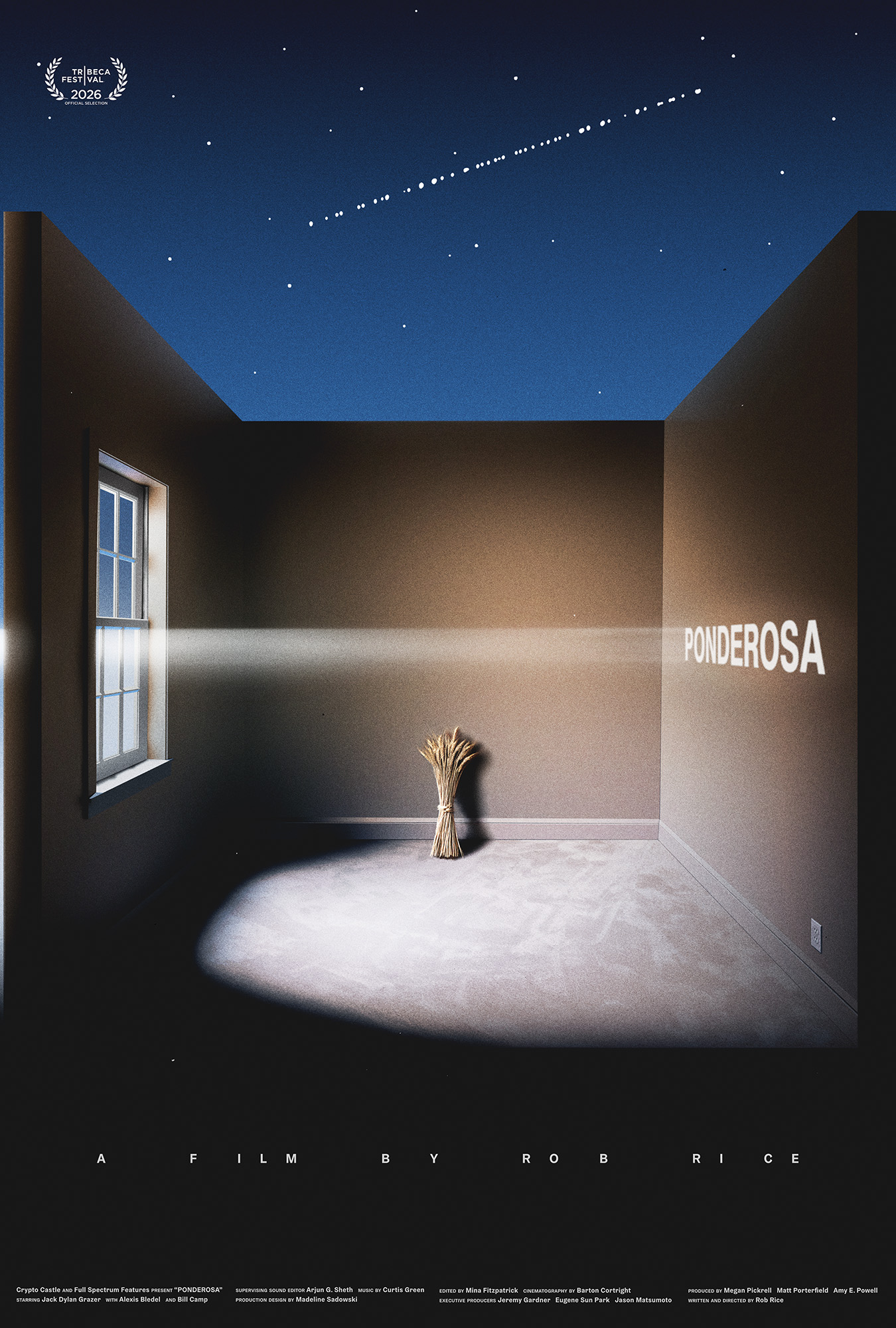
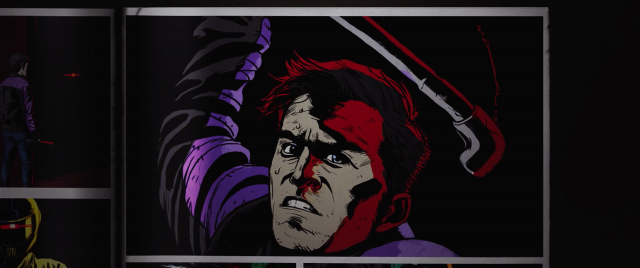
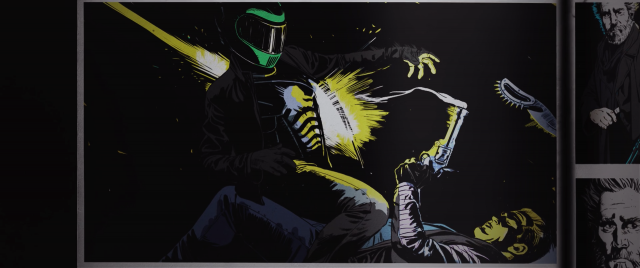
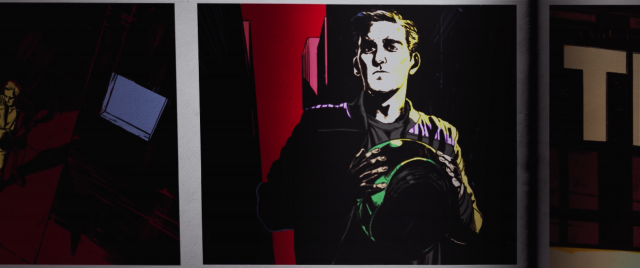
our poster for rob rice’s second feature film, ponderosa, was selected as MUBI’s movie poster of the week today. to accompany the selection caspar was asked by adrian curry to pick his top 10 favourite movie posters (and 10 runners-up) and comment on them. you can read four excerpts from the piece here:
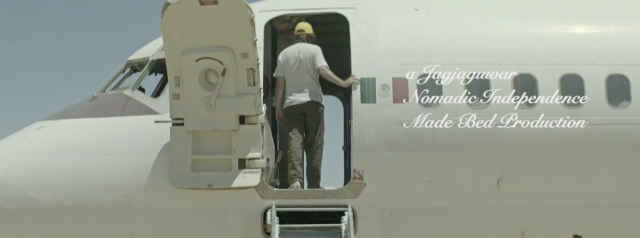
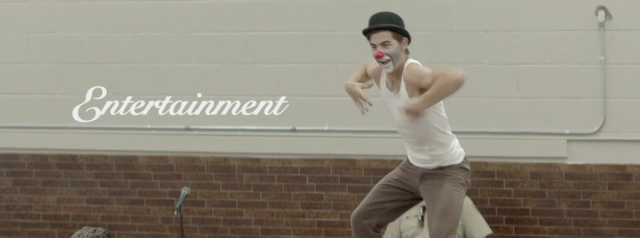
ADRIAN CURRY: Ever since I interviewed designer Caspar Newbolt about his poster for The Act of Coming Out (Alexandra Stergiou, 2022) and he spoke so eloquently about the art of making posters, I’ve been wanting to ask him about his favorite movie posters and the designers who inspired him. With the opportunity to spotlight his newest poster, for the indie film Ponderosa (2026), this seemed the perfect time. Premiering at the upcoming Tribeca Film Festival on June 6, and billed as an experimental comic horror movie, Ponderosa is directed by Rob Rice and concerns a young man named Zeke who, “when the buffet where his mom works closes down, is forced to entertain the wild advances of a rich regular who is weirdly and vehemently obsessed with becoming his father.” Newbolt designed the poster for Rice’s first feature, Way Out Ahead of Us (2022) and his design for Ponderosa is as oblique, intriguing, and flat out beautiful as all of his best work.
You can see where Newbolt is coming from, and what he values most in graphic design, by looking at his favorite posters and reading what he thinks about them.
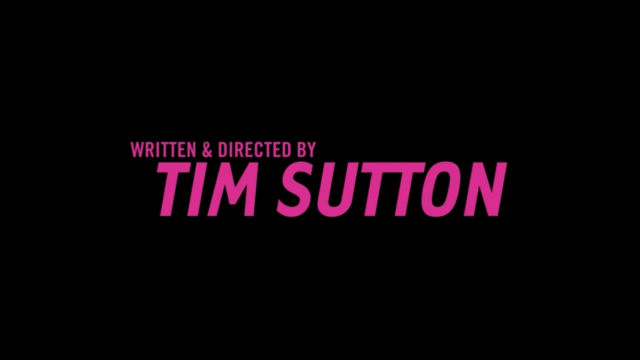
CASPAR: Creatively speaking, I always say “yes” to doing something I’ve never done before and then go home in a panic and quickly figure out how to do that thing. I never went to art school or design school, so this is a good way for me to catch up on some of the schooling I never had. Tim asked me if I could make a poster and titles for his debut feature Pavilion (2012) and I said, “Of course!” This wouldn’t be the last time Tim saw in me something that I did not.
I try very hard to not look at film posters when I work and to do everything in my power to draw from other sources for ideas. I do this because I believe that a really good film poster should be more than just promotional artwork for a film, and in so doing it should not think like other film posters. A great poster should be a piece of artwork that you want on the wall because it—like the film it was based upon—has the poetic capacity to speak to you about your own life. After all, film posters, like all visual marketing pieces, get put up around town without anyone’s permission. Thus, as the Polish poster-maker Leszek Żebrowski suggested when he said to me, “I like making posters because it means I don’t have to get into art galleries any more—the streets are my art gallery now,” it rests upon the shoulders of any poster-maker to make sure our streets are as beautiful as we can make them.
To that end, the following 20 film posters are the exceptions to my own rule. These are the posters that, despite my searching for ideas elsewhere, continue to hugely influence my practice. Each of them has haunted me in different ways for years as I continue to try to make something beautiful and thought-provoking for those of us on the street, going about our daily grinds.
3. 1975 Polish poster by Mieczysław Wasilewski for Pat Garrett and Billy the Kid(Sam Peckinpah, USA, 1973).
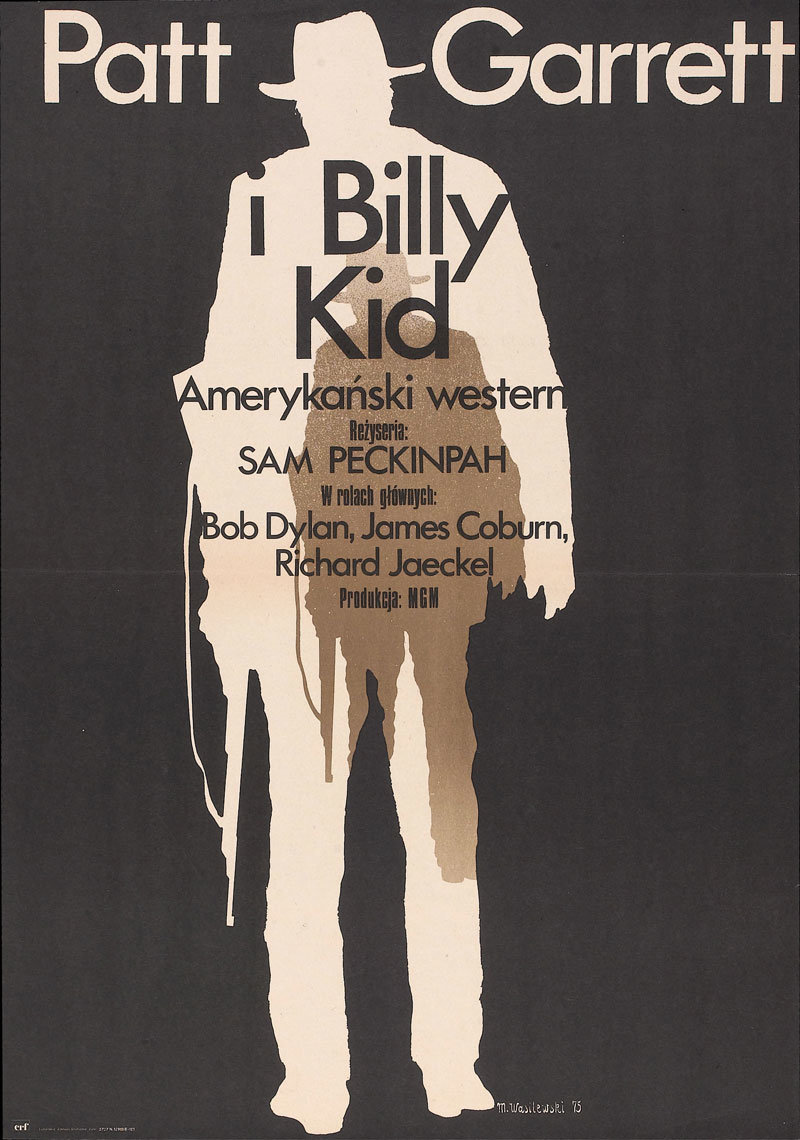
I have a theory about Vasilis Marmatakis’s excellent poster for Yorgos Lanthimos’s The Lobster (2015) and I guess now is the time to publish that theory, given that this Pat Garrett and Billy the Kid poster so substantiates it.
The theory is this: The Lobster poster isn’t just a great poster for the film The Lobster, it’s a great poster for every film. It’s, in fact, a universal film poster. Simply put, you could scratch out the title The Lobster from the poster and write almost any other film name there instead, and the poster would work beautifully. Often filmmakers I’m working with send me the film posters they like or that they hope might inspire our work together. The Lobster poster is regularly included. This is a fact that further supports this theory.
The poster above by Mieczysław Wasilewski proves itself time and again to also be one of these universal film posters. Simply adjust the cut-out figures to that of your film’s protagonists and you could have a poster for a film about someone retreating inside themselves, a poster for a film about someone coming of age, a poster for a film about someone going back in time, a poster for a film about succession, a poster for a film about unrequited love, a poster for a film about swapping bodies with someone else… Honestly, you name it…
Saul Bass was by his own admission someone who tirelessly searched for such universal devices, and to powerful effect. They’re certainly not the be-all and end-all in this kind of work, but if you stumble upon a new one you could have a piece of work that speaks to people more deeply than you originally intended.
8. US one-sheet by Saul Bass for Exodus (Otto Preminger, USA, 1960).
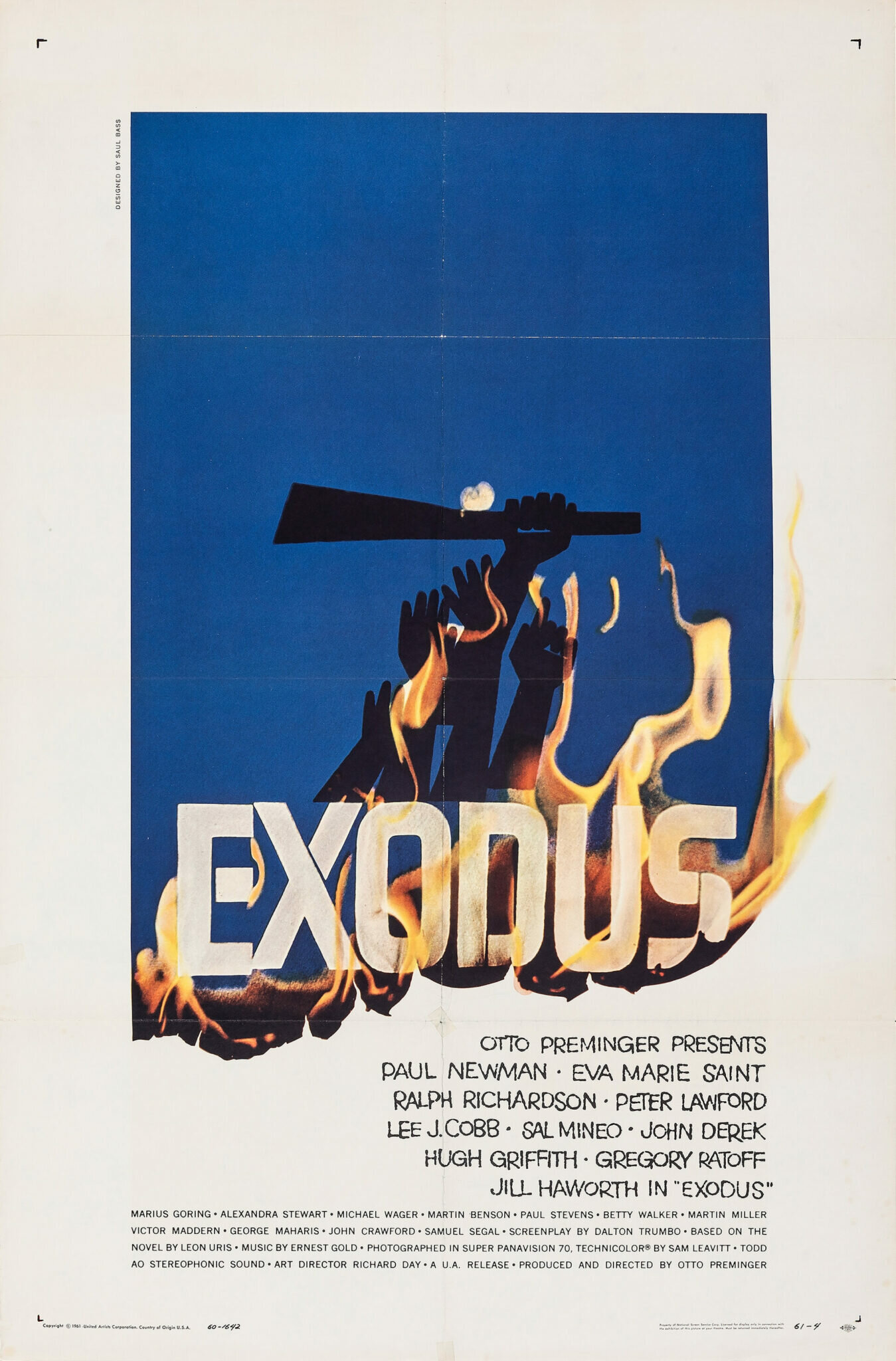
A thing I think about a lot in my practice—thanks in a large part to my years working on Filmmaker Magazine—is how to make print work that looks like it’s physically moving, or has just moved, without using ugly motion blurs or similar effects. Given the inherently static and flat nature of print design this might seem like a fool’s errand. However I’ve come to learn that it is possible and that Saul Bass’s poster for Exodus offers one such solution (see also: Hans Hillmann’s poster for Muriel, which I’ll get to later).
In the case of Exodus, the paper is burning away to reveal the credit block beneath, and you understand from the shape of the blue paper at the top, where the paper would have originally sat, unburnt at the bottom. So whether you use fire or a paper tear or fold that paper up, you’ve created an obvious sense of something moving, or something that has just moved. Thus it’s the combination of what was there before and what was revealed, all the while based on an invisible sense of a grid, that can give a design this kinetic quality. Saul does this here with panache, of course.
you can read the rest of the piece here. a huge thank you again to adrian curry and to everyone at MUBI for the continued support.